
Reviewed · TIBET TOURS
7 Days Lhasa to Kathmandu Overland Small Group Tibet Tour via EBC
The big draw here is the road itself: in seven days, you go from Lhasa’s temples to Everest Base Camp, then down through high Himalayan passes and changing scenery to the Nepal border. I especially like that Tibet permits and transport are handled for you, and that the group is capped at 12 people.
I also like the mix of major sights and smaller moments, from monks debating at Sera Monastery to a stop beside Yamdrok Lake. The main caution is altitude: several days reach above 5,000 meters, and the schedule is demanding. You should be comfortable with long drives, basic high-altitude conditions, and a guesthouse stay near Everest.
Five things to know before booking
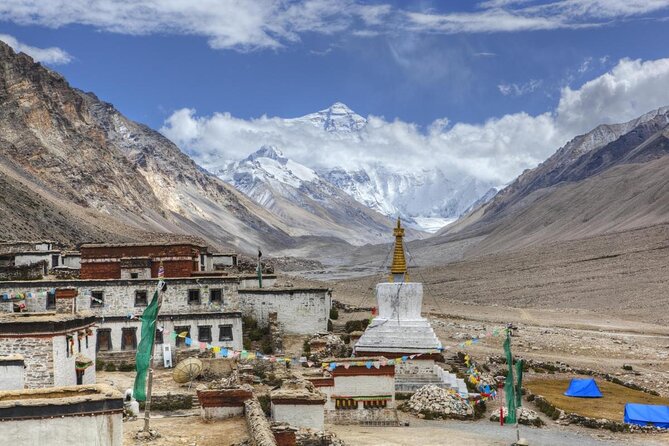
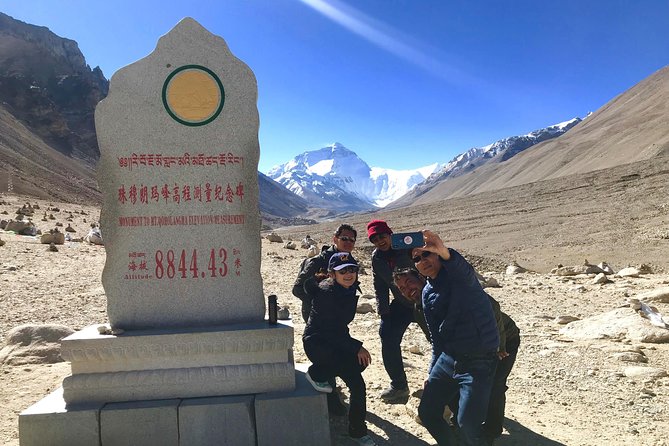
- Everest Base Camp is reached by road: You visit the northern base camp area in Tibet, with a shuttle bus included for the final access section.
- The tour ends at Gyirong border: A separate jeep transfer to Kathmandu costs US$60 and is not part of the listed price.
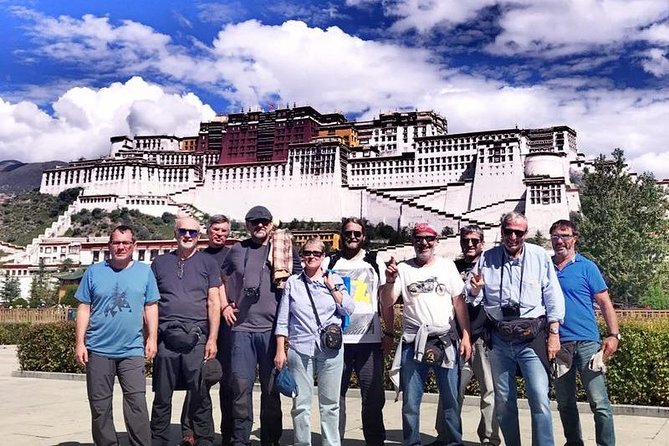
- Lhasa sightseeing is well chosen: Potala Palace, Jokhang Temple, Barkhor Street, Drepung, and Sera give you a strong first look at Tibetan culture.
- Altitude shapes the whole trip: Gampala Pass reaches 4,790 meters, Gyatsola Pass reaches 5,248 meters, and oxygen is carried in the vehicle.
- Guides make a real difference: Names connected with this trip include Lhakpa, Lhakdon, Lobsang, Tserina, and Gyal, though your assigned guide can vary.
Why this seven-day route works
At US$989 per person, this is not a cheap bus ride, but it covers many costly and awkward pieces of a Tibet trip. The price includes a Tibetan English-speaking guide, driver, permits, government taxes, airport or train station pickup in Lhasa, six breakfasts, accommodation, drinking water, oxygen in the vehicle, entrance fees for listed sights, and the Everest Base Camp shuttle.
That matters because Tibet travel is not a simple independent road trip. The permit process, border arrangements, and restricted travel rules require advance planning. You must provide passport and China visa copies, and the operator asks you to book at least 12 working days ahead. In practice, give yourself more time if possible, since documents are a major part of making this trip run smoothly.
Your group can have up to 12 people. That is small enough for a more personal guide experience, but it is still a group tour, not a private journey. You will share a van or minibus, follow a fixed route, and accept the pace set by the road, weather, permits, and border procedures.
The price does not include lunches, dinners, a single-room supplement, or the 130-kilometer jeep trip from Gyirong to Kathmandu. There is one welcome dinner, but you should budget for most other meals. The hotels are generally three-star properties with twin rooms, while the Everest area uses a guesthouse dormitory bed.
More week long trips in China:
- 7-Day TaiChi & Qigong Wellness Retreat in China
★ 5.0 · 20 reviews
Day 1: Arriving in Lhasa and letting your body adjust
Your Tibetan guide meets you at the Lhasa airport or train station and takes you to a downtown hotel. The transfer includes views of the Yarlung Tsangpo River and the approach toward Lhasa, so the journey begins with scenery rather than paperwork and waiting around.
The first day is intentionally light. That is important in Lhasa, which sits at roughly 3,650 meters. You need time to rest and get used to the thin air before a schedule filled with temples and mountain passes. The tour provides oxygen in the vehicle, but oxygen is not a substitute for pacing yourself.
The pickup must be arranged by the tour supplier, so provide your arrival details carefully. The package covers pickup at a designated time, not an open-ended personal taxi service. If you arrive by train or plane from another Chinese city, your China L visa is used for the Tibet permit process.
If you fly from Kathmandu to Lhasa, the visa process is different. The supplied instructions say not to apply for a China L visa in advance in that case. Instead, you apply for a Tibet Group Visa through the Chinese Embassy in Kathmandu with help from a travel agency, using an invitation letter from the tour provider.
Day 2: Potala Palace, Jokhang Temple, and Barkhor Street
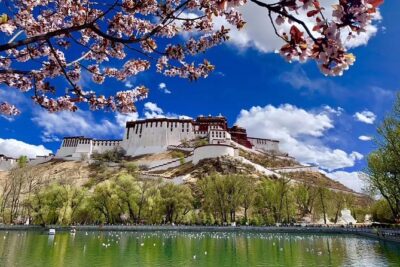
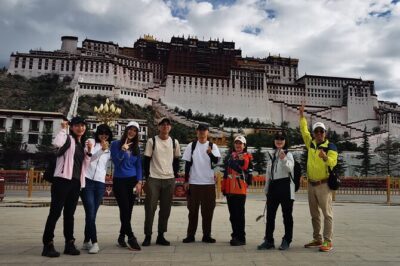
The second day brings you to Lhasa’s essential sights. Potala Palace is the obvious headline, and you have about 90 minutes there. Built as the winter palace of the Dalai Lama and put into use from the seventh century, it is both a dramatic building and a place filled with valuable Tibetan religious objects.
The visit is not simply a photo stop. The palace’s importance comes from its role in Tibetan religious and political life, though the short time means you will need to listen closely and keep moving with the group. The package states that entrance fees for listed sights are included, even though some individual schedule entries mark admission as not included. Confirm the current arrangement with the operator before departure.
After lunch, you visit Jokhang Temple for another 90 minutes. This is the spiritual center of Lhasa, and its most important object is a statue of Buddha Sakyamuni said to represent him at age 12. The temple offers a different experience from Potala Palace: Potala is the grand mountain-top symbol, while Jokhang is closely tied to daily worship and pilgrimage.
Barkhor Street surrounds Jokhang. You can walk the kora, the clockwise religious circuit, alongside pilgrims and local worshippers. You also have about an hour to look around the old market and try Tibetan tea in a local tea house.
This is one of the best parts of the trip for cultural contact because you are not only looking at monuments from a distance. Follow local behavior, keep your voice low near religious activity, and ask your guide before photographing inside temples.
Day 3: Monastic life at Drepung and Sera
Day three is devoted to two of Lhasa’s major Gelug monasteries. In the morning, you visit Drepung Monastery, about 25 kilometers southwest of central Lhasa. The planned stop lasts around three hours, giving you more time than at the main temples.
Drepung is described as a well-preserved old Tibetan settlement surrounded by valleys. Its setting helps explain why a monastery visit is more than a quick look at painted walls and statues. You see how religious buildings, paths, courtyards, and mountain surroundings fit together.
In the afternoon, you visit Sera Monastery for around two hours. The key event is the monk debate, usually held from 3 to 5 p.m. Monks use gestures, questions, and sharp exchanges as part of religious study. The timing makes the afternoon schedule especially useful, since you are more likely to be there during the main debate period.
Past guides on this route have included Lhakpa, Lhakdon, and Lobsang. The guide assigned to you may be different, but the strongest guide experiences described for this trip involve clear explanations of Tibetan Buddhism, a caring manner, and a good sense of humor. One guide, Lobsang, was also known for showing the group local bars and performing magic tricks, which suggests that the social side of the trip can be as enjoyable as the formal sightseeing.
The two monasteries are a good pairing. Drepung gives you time and space, while Sera adds a lively public ritual. Still, you should not expect a slow retreat. There are several major visits in only two days, and you are preparing for a long road journey immediately afterward.
A few more China days to line up
- Tibet Tour 8 Days Lhasa to Everest Base Camp Small Group Tour
★ 5.0 · 578 reviews - 10 Days Tibet Everest Base Camp and Namtso Small Group Tour
★ 5.0 · 108 reviews - 4 Days Lhasa Impression Small Group Tour
★ 4.5 · 67 reviews - 6 Days Central Tibet Culture Small Group Tour
★ 5.0 · 53 reviews
Day 4: Yamdrok Lake, Karo La Glacier, and Gyantse
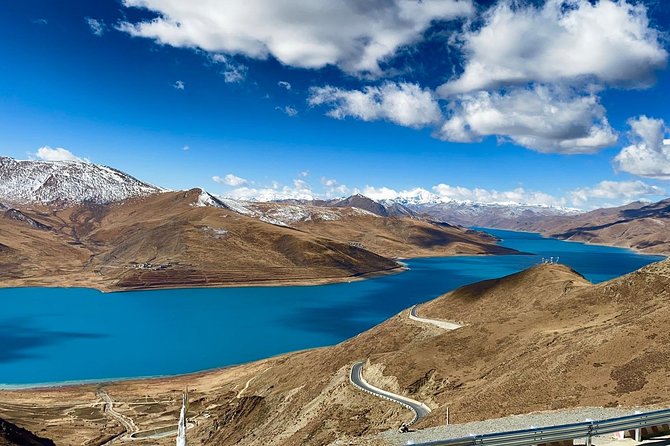
The road section begins on day four, with a drive from Lhasa toward Shigatse. The first major stop is Yamdrok Yumtso, a high lake at about 4,400 meters, reached after crossing Gampala Pass at 4,790 meters.
You get about 30 minutes at the lake. That is enough for photographs and a quick look, but not a long walk along the shore. Snow peaks surround the water, and the high setting gives you one of the trip’s clearest reminders that this is a Himalayan crossing, not an ordinary sightseeing drive.
Later, the road passes Karo La Glacier. It is a roadside viewpoint, with around 30 minutes to stop and take in the ice and mountain setting. The schedule also includes Manak Dam Lake and Simila Mountain Pass, where you can hang prayer flags, before continuing to Gyantse.
Gyantse was historically Tibet’s third-largest city after Lhasa and Shigatse. The visit is brief compared with the Lhasa days, so think of this section as a scenic transfer with selected stops rather than a full exploration of every town.
This day is demanding because the altitude rises quickly and the drive is long. The reward is the change from city temples to open mountain country. The van carries oxygen, and drinking water is provided, but you should still move slowly at stops and tell your guide if you feel unwell.
Day 5: Tashilhunpo Monastery and the road to Everest
In Shigatse, you visit Tashilhunpo Monastery, the traditional home of the Panchen Lama. The stop lasts about 90 minutes. It is a major religious site and gives you another view of Tibet’s monastic traditions before the route turns toward the Everest region.
After the monastery, the group handles the Alien’s travel permit and drives toward Lhatse for lunch. Lunch is not included, so carry some snacks and be ready for simple meal stops. The schedule then crosses Tsola Pass at about 4,600 meters and Gyatsola Pass at 5,248 meters.
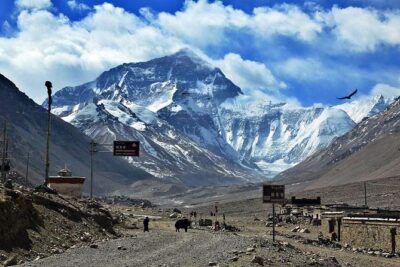
The high point is Gawula Pass, around 5,198 meters, inside the Mount Everest National Nature Reserve. If the weather is clear, you can see a broad Himalayan panorama, including the highest peaks. Weather is a real factor here, not a minor detail. Cloud, snow, or poor visibility can change what you see, and the activity may be moved or canceled if conditions are unsafe.
You then continue toward Everest Base Camp. The package includes the Everest Base Camp shuttle bus and platform service fee. This helps because the final access section is controlled, and you are not expected to arrange every transfer yourself.
The Everest stop is one of the strongest reasons to choose this route. It is also one of the least comfortable nights. Accommodation near the base camp is a guesthouse dormitory bed rather than a standard three-star hotel, and the altitude is extreme. Set your expectations correctly: the value is the location and the mountain view, not hotel luxury.
Day 6: Rongbuk Monastery and the descent to Gyirong
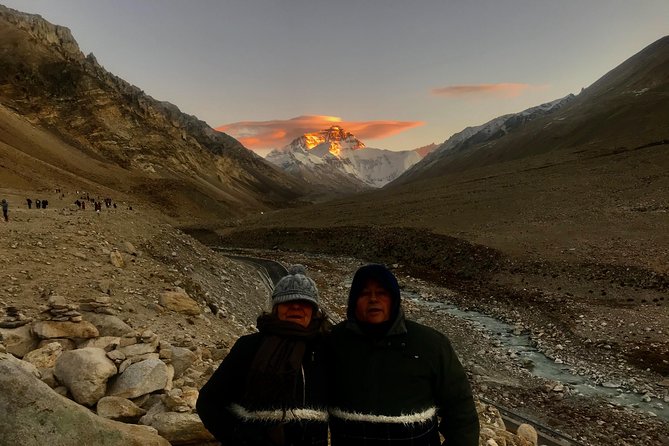
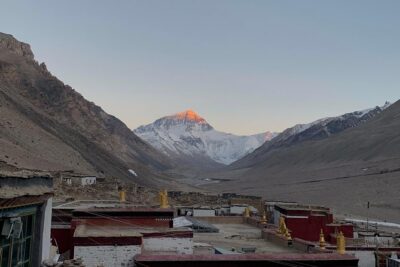
If weather permits, you can see sunrise over Everest from the lodging area. This is a short window, so your experience depends heavily on cloud and visibility. Even with good weather, cold and altitude can make the morning physically taxing.
You then visit Rongbuk Monastery, described as the highest monastery, where nuns and monks live together. The stop lasts about 30 minutes. It is short, but the setting gives the visit unusual force, with the Everest region immediately around you.
The road to Gyirong brings more striking changes. You pass views of Mount Shishapangma and Pekutso Lake, then cross Ghungtang Lhamo at about 5,236 meters. By late afternoon, you reach Gyirong.
The descent is one of the clever features of the route. From elevations above 5,000 meters, you drop toward Gyirong County and begin to see forests and waterfalls instead of bare snow country. That shift gives the day a satisfying sense of movement, even though much of it is spent in the vehicle.
This is also when the long road hours may catch up with you. A guide and careful driver matter here. Previous guide and driver combinations have included Lhakdon and Sangye, with praise for organization, humor, careful driving, and personal attention. Those qualities are useful on a route where comfort depends as much on the people in the van as on the seats themselves.
Day 7: Leaving Tibet at Gyirong border
On the final day, your guide assists you as you exit China and sees you off at the Gyirong border. The tour ends there, not in Kathmandu.
You can arrange a jeep transfer onward to Kathmandu for an additional US$60. This cost is separate, and the border crossing and road transfer should be treated as the final piece of your planning. The supplied information does not include a Kathmandu hotel or further sightseeing, so arrange those independently.
The border finish is practical rather than polished. You are ending a demanding overland route, not stepping directly into a ready-made Nepal holiday. Still, reaching the border by road gives the trip a clear purpose and makes sense for anyone who wants to connect Tibet with Nepal.
Guides, vehicles, and daily comfort
The tour uses a comfortable van or minibus with an experienced local driver. Gasoline, drinking water, tourist accident insurance, and an oxygen supply in the vehicle are included. Hotel pickup in Lhasa is also covered at the designated arrival time.
A maximum of 12 people keeps the group fairly manageable. You will still need patience when everyone is boarding, taking photographs, or ordering lunch, but a small group makes it easier to hear the guide and ask questions.
The guide is an English-speaking Tibetan local. That local perspective is especially valuable at Jokhang, Barkhor, Drepung, and Sera, where religious customs can be easy to misread. Guides associated with the route, including Lhakpa, Lhakdon, Lobsang, Tserina, and Gyal, have been described as warm, funny, organized, and well informed about Buddhism and Tibetan history.
The hotels are based on double occupancy in twin rooms. A single supplement applies if you want your own room or if sharing is not possible. The base price includes six breakfasts, but not most lunches and dinners, so the final cost will be higher than US$989.
Who should book this Tibet overland tour?
I would choose this trip if you want the major sights without managing permits, transport, and the border route alone. It suits someone who values mountain scenery, monasteries, long road journeys, and a fixed schedule more than comfort or free time.
It is less suitable if you need a gentle altitude program, dislike shared rooms, want private sightseeing, or expect a hotel room at Everest Base Camp. The pace is brisk, and several stops are short because the road to Gyirong covers a great distance.
Book well ahead. The operator asks for at least 12 working days, and passport and China visa copies are required at least 20 days before departure. Confirmation comes within 48 hours when space is available, but permits remain the key reason not to leave arrangements until the last minute.
The cancellation terms are useful if you act early: cancel at least six full days before the start for a full refund. The refund drops to 50 percent for cancellation two to six days before departure, and there is no refund within two days. Weather and minimum group size can also cause a date change or full refund.
Should you book it?
Book this tour if Everest Base Camp and a Lhasa-to-Nepal road journey are your priorities. The permits, guide, vehicle, accommodation, breakfast, oxygen, and listed admissions give the US$989 price solid value, especially for a first Tibet visit.
Skip it if you want a slow holiday or polished comfort. The real cost includes high-altitude strain, long drives, extra meals, a dormitory night, and the US$60 border jeep. For the right person, though, this is a focused way to see Lhasa, Tibet’s major monasteries, Everest, and the changing road down to Gyirong in one compact week.
FAQ
How long is the Lhasa to Kathmandu overland tour?
The experience lasts approximately seven days. It begins with pickup in Lhasa and ends at the Gyirong border after assistance exiting China.
Does the tour include the transfer from Gyirong to Kathmandu?
No. A jeep transfer from Gyirong border to Kathmandu can be arranged for an additional US$60.
Is Everest Base Camp included?
Yes. The route visits the Tibet side of Everest Base Camp, and the package includes the Everest Base Camp shuttle bus and platform service fee.
Are Tibet permits included?
Yes. Tibet Travel Permits and other necessary Tibet permits are included. The operator also provides a Chinese Visa invitation letter if needed.
What documents are required?
You must provide photocopies of your passport and China L visa. The operator asks for these documents at least 20 days before the travel date.
Is airport or train station pickup included in Lhasa?
Yes. Pickup and drop-off at Lhasa airport or train station are included when arranged with the tour supplier at the designated time.
What type of accommodation is provided?
Accommodation is based on three-star hotels in twin-sharing rooms, with guesthouse dormitory beds used on the Everest section. A single supplement is extra.
Are meals included?
Six breakfasts and one welcome dinner are included. Lunches and most dinners are not included.
How large is the group?
The maximum group size is 12 people. Transport is by van or minibus.
Is oxygen provided?
Yes. Oxygen is provided in the tourist vehicle. The tour still involves passes above 5,000 meters, so you should be prepared for demanding high-altitude conditions.
What happens if bad weather affects the tour?
If poor weather causes cancellation, you are offered a different date or a full refund. The same applies if the minimum number of participants is not reached.
Recently listed in China
- Nanjing By Night: Qinghuai River Cruise with Authentic Dining Experience★ 5.0 · 5 reviews
- 1 day Car Hire in Shenzhen with Driver (10 hours)★ 3.0 · 5 reviews
- Beijing Mutianyu Great Wall Private Tour with Lunch★ 5.0 · 5 reviews
- Flexible Hangzhou Private Day Tour with Lunch★ 5.0 · 5 reviews
- Customized Private Beijing Layover City Tour★ 5.0 · 5 reviews
- Private Tour of Shanghai Highlights and Zhujiajiao Water Town in One Day★ 5.0 · 5 reviews
- 4-Hour Suzhou Private Flexible Tour with Garden and Boat Ride Option★ 5.0 · 5 reviews
- Private Tour to Gubei Water Town and Simatai Great Wall with Cable Car and Lunch★ 5.0 · 5 reviews
Tibet Tours, compared.
Tibet Tour 8 Days Lhasa to Everest Base Camp Small Group Tour
Read our review →
10 Days Tibet Everest Base Camp and Namtso Small Group Tour
Read our review →
8 Days Lhasa Gyantse Shigatse Mt Everest Group Tour
Read our review →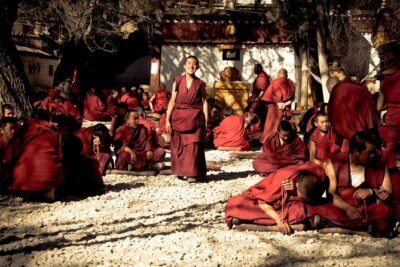
Private Guided Day Tour Potala Palace and Sera Monastery
Read our review →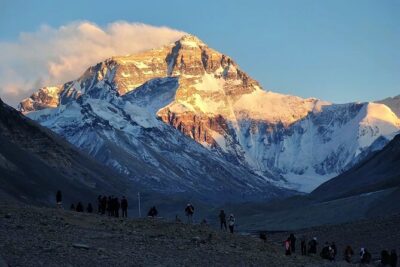
9 Days Lhasa Gyantse Shigatse Everest Namtso Group Tour
Read our review →Browse the lists this tour appears in